
In today’s competing digital scenario, personalization in digital marketing is no longer optional – This is the driving force behind meaningful customer experiences. Brands construct deep belief in the master’s privatization, strong loyalty and high conversion frequencies. By 2025, personalization will not only be about addressing customers with the first name; this will be about distributing hyper-relevant, reference-driven and data-driven experiences at each digital touch point.
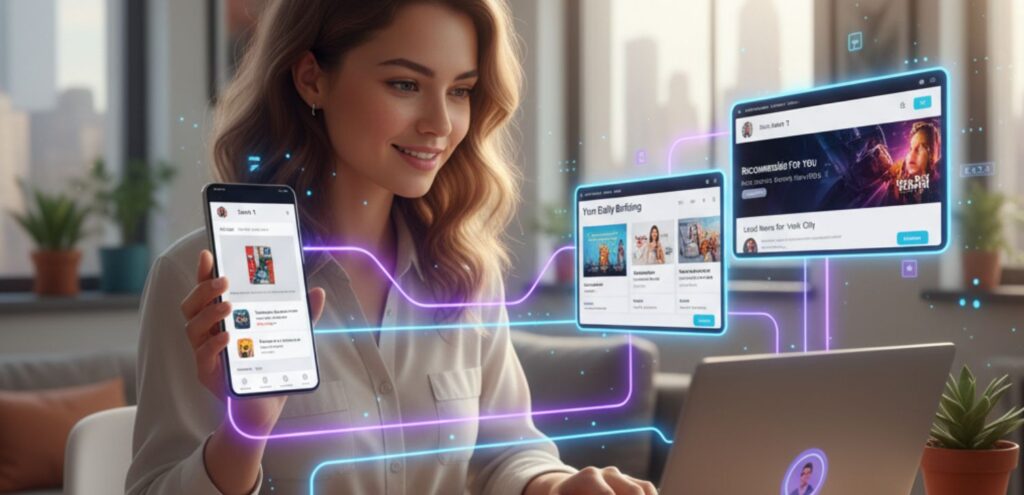
As a major digital marketing company, Labhanya helps technology companies unlock the actual power of personalization by combining data insights, advanced automation and customer -focused strategies. In this guide, we will discover the best practice for digital marketing personalization in 2025, as well as action -rich tips to help your business stay ahead.
Personalization in Digital Marketing: Why It Matters in 2025
Customers’ expectations are developing rapidly. Today’s consumers require more than general ads or campaigns of size to all. They will:
- Relevant recommendations to suit their needs.
- Spontaneous digital experience in web, mobile and social channels.
- Brands that understand their behavior and provide value continuously.
Recent studies show that:
- 80% of consumers are more likely to buy from brands that provide personal experiences.
- Individual E-mails provide 6x high transaction rates compared to non-targeted emails.
- Companies that use personalization are effectively looking at an average ROI boost of 20%.
It is clear that personalization in digital marketing is not just a trend – this is the basis for customer engagement in 2025.
Leveraging customer data for smarter personalization
Data is the heart of personalization. But by 2025, the emphasis will be on using the correct data from collecting large -scale data.
The best practices include:
- Zero Party data: Encourage users to voluntarily share preferences through quiz, examination and interactive tools.
- First -sided data: Track your customer behavior on your site and apps while maintaining privacy compliance.
- AI-driven insight: Use machine learning to predict the customer’s needs, such as what product they want to buy or when they are most likely to be linked to.
By connecting these insights, brands can deliver personalization that feels natural rather than intrusive.
Personalization trends shaping customer experience in 2025
Large trends must be adopted to distribute individual customer experiences:
- Real-time personalization – Respond to customer actions instantly. For example, if a user abandons their cart, send a timely push notification with a discount.
- Omnichannel personalization – Provide a consistent experience across websites, apps, social media, and email.
- Voice and AI personalization – With voice assistants and chatbots growing, personalizing interactions through conversational AI will become critical.
- Privacy-first personalization – As regulations tighten, marketers must ensure transparency in how they collect and use customer data.
Best practices for personalized content marketing
Content is one of the most effective methods for using digital marketing personalization. This way:
- Segment your audience: Use demographics, interests and behavior to create analog material for different customer groups.
- Dynamic website content: Show product recommendations, blog posts or offers based on user history.
- Personal E -Post Marketing: In addition to the use of names, products based on surfing or buying behavior are recommended.
- Interactive materials: Quiz, calculator and pole feel actively engaged to customers and provide valuable data.
When privatization materials are found in marketing, the result is a high -attractive branding experience that runs loyalty.
Using AI and automation for personalization at scale
It is impossible for each customer to manually adapt the contact, which is why AI-operated personalization and automation tools are changing in 2025.
Examples include:
- Recommendation engine: Customer proposes products or services based on browser patterns.
- AI chatbots: Deliver conversational support that feels human while guiding users toward purchases.
- Predictive personalization: Anticipate customer needs by analyzing patterns in large datasets.
At Labhanya technologies, we integrate AI and automation into our privatization strategies to help customers have consistent, scalable and cost-trained experiences.
Balancing personalization and privacy
One of the biggest challenges in personalization is maintaining customer trust. As data privacy becomes a top priority, businesses must adopt privacy-first personalization strategies:
- Be transparent about how data is collected and used.
- Offer clear opt-in and opt-out options.
- Respect customer boundaries while still delivering value-driven recommendations.
Brands that balance personalization with privacy will gain a competitive advantage in 2025.
The ROI of personalization in Digital Marketing
Investing in personalization isn’t just about creating better experiences—it’s about driving measurable results. Companies implementing effective personalization strategies see:
- Higher customer retention rates.
- Increased average order value.
- Improved conversion rates across campaigns.
- Stronger brand loyalty and advocacy.
Personalization in digital marketing directly impacts the bottom line, making it one of the smartest investments for 2025.
Step-by-step framework to personalize your digital strategy
Here is a fast road map that you can follow:
- Audit Current Customer Data – Identify what data you have and what holes exist.
- Define customer segments – group audience based on demographics, behavior and preferences.
- Mapping customer journey – understand the most important touch points where personalization will have the most impact.
- Take advantage of AI and automation – Use the tool to score personalization in channels.
- Testing, measurement and refinement – Optimize frequent personalization strategies based on display data.
After this structure, it will ensure that your privatization effort is structured, scalable and result-in-operated.
THE BOTTOM LINE
As we continue until 2025, personalization in digital marketing is no longer a differential – this is standard. Customers expect each conversation with your brand to feel relevant, in time and personal. From AI-interacted recommendations to confidentiality first personalization, brands that use these best practices will grow in the digital economy.

At Labhanya Technologies, we specialize in creating personalized digital strategies that blend data, creativity, and cutting-edge technology. Our goal is to help businesses engage their audience more meaningfully and achieve long-term growth. Contact us today and prepare us an individual digital marketing strategy that suits our business goals. Call +91 9279789479 (India) and +1 719 999 0082 for international certification.
Please contact Labhanya Technologies expert team here